
What Is Personal Injury Law?
Personal injury law is a branch of civil law that allows injured individuals to seek compensation when another party's negligence or misconduct harms them. Unlike criminal cases, which are brought by the government and focus on punishment, personal injury claims are filed by private individuals with the help of a local personal injury lawyer seeking financial recovery for their losses.
Injury law applies when one party owed a duty of care to another and failed to act responsibly, resulting in injury. This duty of care exists in many everyday situations, such as drivers operating vehicles safely, property owners maintaining safe premises, and medical professionals providing competent care. When that duty is breached, and someone is hurt as a result, personal injury law provides a legal remedy.
Personal injury attorneys play a central role in these cases by investigating the facts, gathering evidence, and advocating for their clients. Injury law firms focus on proving liability and demonstrating how an injury has affected a person's life, health, and ability to work. A local personal injury lawyer's goal is to secure compensation that reflects both immediate losses and long-term consequences of the injury.
Common Types of Personal Injury Cases
Personal injury law covers a wide range of accidents and harmful incidents caused by negligence or wrongful conduct. Injury law firms handle many different case types, each with its own legal standards, evidence requirements, and challenges. Below are some of the most common personal injury claims pursued by the best personal injury attorneys near you.
- Car Accidents
Car accidents are among the most frequent personal injury claims handled under injury law. These cases often arise from distracted driving, speeding, drunk driving, failure to yield, or running red lights. Personal injury attorneys evaluate police reports, traffic laws, medical records, and witness statements to establish fault and pursue compensation for medical bills, lost income, pain and suffering, and vehicle damage. Injury law firms frequently negotiate with auto insurance companies that attempt to minimize payouts. - Truck Accidents
Truck accident cases are typically more complex than standard car accident claims due to the involvement of commercial vehicles and multiple potentially liable parties. Personal injury lawyers may pursue claims against truck drivers, trucking companies, cargo loaders, or maintenance providers. In these cases, injury law often involves federal safety regulations, driver logbooks, and corporate insurance policies, making experienced personal injury attorneys essential. - Motorcycle Accidents
Motorcycle accidents often result in severe or catastrophic injuries because riders lack the protection of an enclosed vehicle. Personal injury law recognizes that motorcyclists are especially vulnerable to negligent drivers who fail to see them or respect their right of way. Injury law firms focus on overcoming bias against riders while pursuing compensation for broken bones, spinal injuries, traumatic brain injuries, and long-term disabilities. - Pedestrian Accidents
Pedestrians are at high risk of serious injury when struck by a motor vehicle. These personal injury claims commonly involve crosswalk violations, distracted driving, speeding, or failure to yield. Personal injury attorneys work to demonstrate how driver negligence caused the injuries and how the incident has affected the victim's ability to work and live independently. - Bicycle Accidents
Bicycle accident claims fall under personal injury law when a cyclist is injured due to a motorist's negligence or unsafe road conditions. Injury law firms may pursue claims involving dooring accidents, unsafe lane changes, intersection collisions, or defective road design. A personal injury lawyer may also evaluate whether municipal entities share responsibility for dangerous infrastructure. - Slip and Fall Accidents (Premises Liability)
Slip and fall cases arise when property owners fail to maintain safe conditions on their premises. Common hazards include wet floors, uneven sidewalks, poor lighting, broken handrails, and unmarked dangers. Personal injury attorneys must show that the property owner knew or should have known about the hazard and failed to correct it, as required under injury law. - Workplace Injuries
Workplace injuries may involve construction accidents, equipment malfunctions, repetitive stress injuries, or unsafe working conditions. While workers' compensation may apply, personal injury law also allows claims against third parties such as equipment manufacturers or subcontractors. Injury law firms assess whether additional compensation is available beyond workers' compensation benefits. - Medical Malpractice
Medical malpractice claims occur when healthcare providers fail to meet accepted standards of care, resulting in patient injury. These cases often involve misdiagnosis, surgical errors, medication mistakes, or delayed treatment. Personal injury attorneys rely on expert testimony and detailed medical records to prove negligence under injury law. - Dog Bites and Animal Attacks
Dog bite cases are a common form of personal injury law, particularly in states with strict liability statutes. Injury law firms examine leash laws, prior incidents, and owner negligence when pursuing compensation for medical treatment, scarring, emotional trauma, and infection risks. A personal injury lawyer may also address claims involving children, who are especially vulnerable to severe injuries. - Product Liability
Product liability claims arise when defective or dangerous products cause injury. These cases may involve design defects, manufacturing defects, or failure to provide adequate warnings. Personal injury attorneys may pursue claims against manufacturers, distributors, and retailers under principles of injury law that hold companies accountable for unsafe products. - Wrongful Death
Wrongful death claims are brought when a person loses their life due to another party's negligence or misconduct. Personal injury law allows surviving family members to seek compensation for funeral expenses, lost financial support, and loss of companionship. Injury law firms approach these cases with sensitivity while aggressively pursuing accountability on behalf of grieving families.
Elements of a Personal Injury Claim
Every personal injury claim must satisfy specific legal requirements to succeed. Personal injury law is built around the concept of negligence, and injury law firms must prove each required element before compensation can be awarded. Personal injury attorneys carefully analyze these elements when evaluating whether a case is viable.
- Duty of Care
Duty of care refers to the legal obligation one party has to act reasonably and avoid causing harm to others. In personal injury law, this duty applies in many everyday situations, such as drivers operating vehicles safely, property owners maintaining safe premises, and professionals providing services that meet accepted standards. A personal injury lawyer must first establish that the responsible party owed a duty of care to the injured individual. - Breach of Duty
A breach of duty occurs when a person or entity fails to meet the standard of care required under injury law. This may involve careless actions, reckless behavior, or failure to act when action was required. Personal injury attorneys demonstrate a breach by showing that the at-fault party acted in a way that a reasonably prudent person would not have under similar circumstances. - Causation
Causation links the breach of duty directly to the injury suffered. Under personal injury law, it is not enough to show that someone acted negligently; injury law requires proof that this negligence actually caused the harm. Injury law firms rely on medical records, expert testimony, accident reconstruction, and timelines to establish this critical connection. - Damages
Damages represent the losses suffered as a result of the injury. Personal injury claims must include measurable damages such as medical expenses, lost wages, and pain and suffering. Personal injury attorneys document both economic and non-economic losses to show how the injury has impacted the victim's health, finances, and quality of life.
If any of these elements cannot be proven, a personal injury claim may fail. For this reason, working with an experienced personal injury lawyer is often essential to building a strong case under injury law.
Determining Fault and Liability
Determining fault is one of the most important aspects of personal injury law. Injury law assigns financial responsibility to the party whose negligence caused the injury, but liability is not always straightforward. Personal injury attorneys must evaluate the facts of the case and apply legal standards to determine who should be held accountable.
Fault is commonly established by examining evidence such as police reports, witness statements, surveillance footage, medical records, and expert analysis. Injury law firms use this evidence to reconstruct what happened and identify violations of safety rules or legal duties.
Many personal injury cases involve negligence, which occurs when a person fails to act with reasonable care. However, some cases involve strict liability, where fault may exist regardless of intent or carelessness, such as certain product liability or dog bite claims.
In situations where multiple parties share responsibility, injury law applies comparative or contributory negligence rules. Under comparative negligence systems, an injured person may still recover compensation even if they were partially at fault, though the recovery may be reduced. Personal injury attorneys carefully assess how fault is allocated, as this directly affects the value of a claim.
Insurance companies play a significant role in fault determinations, often attempting to shift blame to reduce payouts. A personal injury lawyer counters these efforts by presenting evidence, legal arguments, and documentation that support the injured party's position. Injury law firms are particularly skilled at challenging unfair fault assessments and protecting clients from being wrongfully blamed.
Understanding how fault and liability are determined is essential in personal injury law, as these findings influence settlement negotiations, litigation strategies, and ultimate compensation outcomes.
Types of Injuries Covered
Personal injury law applies to a wide range of physical, emotional, and psychological injuries. Injury law does not require an injury to be permanent to qualify for compensation. Still, the severity, duration, and long-term impact of an injury often influence the value of a claim. Personal injury attorneys carefully document the nature of an injury and how it affects a person's daily life, work, and future health.
- Soft Tissue Injuries
Soft tissue injuries include whiplash, muscle strains, ligament sprains, and tendon damage. These injuries are common in car accidents and slip and fall incidents and may not always appear on imaging tests. Injury law firms rely on medical documentation, treatment history, and expert opinions to demonstrate the seriousness of these injuries under personal injury law. - Broken Bones and Fractures
Fractures can range from simple breaks to complex injuries requiring surgery, pins, or long-term rehabilitation. Personal injury lawyers evaluate how fractures impact mobility, employment, and future medical needs when pursuing compensation. Injury law recognizes that even healed fractures can lead to chronic pain or permanent limitations. - Head and Traumatic Brain Injuries
Head injuries and traumatic brain injuries are among the most serious injuries addressed in personal injury law. These injuries may cause cognitive impairment, memory loss, personality changes, and long-term disability. Personal injury attorneys often work with neurologists and life care planners to fully assess damages in these cases. - Spinal Cord and Back Injuries
Spinal injuries can lead to chronic pain, limited mobility, or paralysis. Injury law firms treat these claims with particular care due to the potential for lifelong medical treatment and loss of earning capacity. A personal injury lawyer must account for both immediate medical costs and future care needs. - Internal Injuries
Internal injuries, such as organ damage or internal bleeding, may not be immediately apparent after an accident. Personal injury law allows recovery for these injuries once they are properly diagnosed and linked to the incident. Injury law firms emphasize prompt medical evaluation to prevent insurers from disputing causation. - Burn Injuries
Burns may result from fires, explosions, chemical exposure, or defective products. These injuries often require extensive treatment, skin grafts, and long-term rehabilitation. Personal injury attorneys pursue compensation for physical pain, emotional trauma, and permanent scarring under injury law. - Psychological and Emotional Injuries
Emotional distress, anxiety, depression, and post-traumatic stress disorder may accompany physical injuries or occur on their own. Personal injury law recognizes psychological harm as a compensable injury when supported by medical evidence. Injury law firms work to demonstrate how emotional injuries affect daily functioning and quality of life. - Permanent and Catastrophic Injuries
Catastrophic injuries include amputations, paralysis, severe brain damage, and other life-altering conditions. Personal injury attorneys approach these cases with a focus on long-term financial security, including future medical care, adaptive equipment, and loss of earning capacity.
Medical Treatment and Documentation
Medical treatment and documentation are critical components of any personal injury claim. Under personal injury law, the injured party must demonstrate that their injuries are real, serious, and directly related to the incident in question. Injury law firms emphasize the importance of prompt and consistent medical care from the very beginning of a case.
Seeking immediate medical attention after an accident protects both health and legal rights. Delays in treatment may allow insurance companies to argue that injuries were minor or unrelated. Personal injury attorneys often review treatment timelines to identify and address potential weaknesses in a claim.
Medical records serve as foundational evidence in injury law cases. These records document diagnoses, treatment plans, medications, physical therapy, and recovery progress. A personal injury lawyer uses this documentation to establish the severity of injuries and justify compensation demands.
Following medical advice is equally important. Failing to attend appointments or ignoring treatment recommendations may harm a personal injury claim. Injury law firms regularly counsel clients on how treatment compliance affects case value and credibility.
In some cases, insurance companies may request an independent medical examination. Personal injury attorneys prepare clients for these evaluations and ensure that the process is fair and properly documented. Injury law firms also work with medical experts to explain long-term consequences, future care needs, and permanent impairments.
Strong medical documentation not only supports injury law claims but also strengthens settlement negotiations and trial presentations. For personal injury lawyers, medical evidence often serves as the backbone of a successful case.
Damages in Personal Injury Cases
Damages are the monetary compensation awarded to an injured person under personal injury law. The purpose of damages is to restore the injured party, as much as possible, to the position they were in before the injury occurred. Injury law firms evaluate damages carefully to ensure all losses-both visible and intangible-are fully accounted for.
- Economic Damages
Economic damages are measurable financial losses resulting from an injury. Bills, pay stubs, and financial records typically support these damages. Personal injury attorneys commonly pursue economic damages for medical expenses, rehabilitation costs, prescription medications, lost wages, reduced earning capacity, and future medical care. Injury law recognizes that these costs may extend far beyond the initial treatment period. - Non-Economic Damages
Non-economic damages compensate for losses that do not have a fixed dollar value. These include pain and suffering, emotional distress, mental anguish, loss of enjoyment of life, and loss of companionship. Personal injury law allows recovery for these harms because injuries often affect far more than finances. Injury law firms rely on medical evidence, personal testimony, and expert opinions to demonstrate the full impact of these losses. - Punitive Damages
Punitive damages are awarded in limited cases where the at-fault party's conduct was particularly reckless or intentional. Unlike other damages, their purpose is not compensation but deterrence. Personal injury lawyers may seek punitive damages in cases involving drunk driving, extreme negligence, or intentional harm, where injury law permits such recovery. - Wrongful Death Damages
In wrongful death cases, damages may include funeral and burial expenses, loss of financial support, loss of services, and loss of companionship. Personal injury attorneys work closely with surviving family members to pursue these claims while handling them with care and sensitivity under injury law.
Understanding the types of damages available is essential in personal injury law, as they directly affect settlement negotiations and trial outcomes. Injury law firms aim to present a complete and compelling picture of how an injury has altered a person's life.
How Compensation Is Calculated
Calculating compensation in personal injury cases involves far more than adding up medical bills. Injury law requires a detailed analysis of how an injury affects both present circumstances and future outcomes. Personal injury attorneys use a variety of factors to determine the appropriate value of a claim.
The severity of the injury is one of the most influential factors. More serious injuries typically require longer recovery periods, more extensive medical treatment, and may result in permanent limitations. Injury law firms assess how the injury impacts daily activities, work responsibilities, and long-term health.
Medical treatment plays a central role in compensation calculations. Personal injury lawyers evaluate the type of care received, the duration of treatment, and the likelihood of future medical needs. Ongoing therapy, surgeries, and assistive devices are often factored into injury law calculations.
Lost income and reduced earning capacity are also critical considerations. Injury law allows compensation for time missed from work and diminished ability to earn in the future. Personal injury attorneys may work with vocational experts or economists to quantify these losses.
Non-economic damages, such as pain and suffering, are calculated based on the intensity and duration of physical pain, emotional distress, and lifestyle changes. Injury law firms often use comparative case analysis and expert testimony to justify these amounts.
Insurance policy limits can significantly affect compensation. Even when injuries are severe, recovery may be capped by available insurance coverage. Personal injury lawyers explore all potential sources of compensation, including multiple policies and liable parties, to maximize recovery under injury law.
Ultimately, compensation is calculated through a combination of legal standards, factual evidence, and negotiation strategy. Injury law firms play a key role in presenting a compelling claim that reflects the true cost of an injury.
The Personal Injury Claims Process
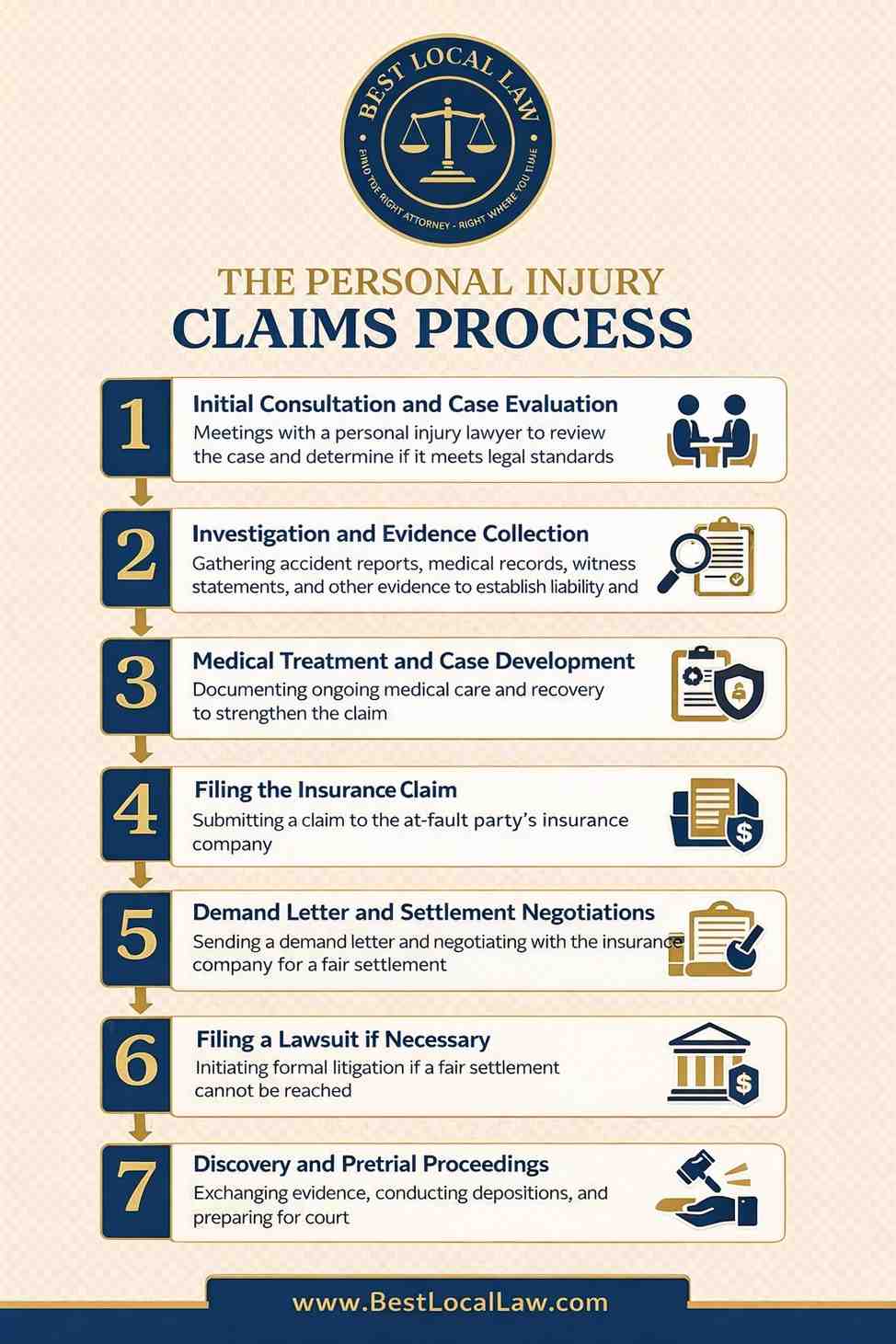
The personal injury claims process follows a series of defined steps, though timelines and procedures may vary depending on the facts of the case and the applicable injury law. Understanding each stage helps injured individuals see how personal injury attorneys build and pursue claims from start to finish.
- Initial Consultation and Case Evaluation
The process begins with an initial consultation with a personal injury lawyer. During this stage, the attorney reviews how the injury occurred, the medical treatment received, and whether negligence may have been involved. Injury law firms use this evaluation to determine if the case meets the legal standards required under personal injury law. - Investigation and Evidence Collection
Once representation begins, personal injury attorneys conduct a thorough investigation. This includes collecting accident reports, medical records, photographs, videos, witness statements, and any available surveillance footage. Injury law firms use this evidence to establish liability, causation, and damages. - Medical Treatment and Case Development
As the injured person continues medical treatment, the personal injury lawyer monitors progress and documents recovery. Injury law requires clear proof linking medical care to the accident, and ongoing documentation strengthens the claim's value under personal injury law. - Filing the Insurance Claim
The personal injury attorney submits a claim to the at-fault party's insurance company. This step formally initiates the compensation process under the law of injury. Insurance companies assign adjusters to review liability and damages. - Demand Letter and Settlement Negotiations
A detailed demand letter is prepared outlining the facts of the case, the injuries sustained, the medical treatment, and the compensation sought. Personal injury attorneys negotiate with insurance companies to reach a fair settlement that reflects the full scope of damages under personal injury law. - Filing a Lawsuit if Necessary
If negotiations fail, the personal injury lawyer may file a lawsuit to preserve the claim and pursue compensation through the court system. Injury law firms prepare legal pleadings and begin formal litigation. - Discovery and Pretrial Proceedings
During discovery, both sides exchange information, conduct depositions, and consult expert witnesses. Many personal injury claims settle during this phase as evidence clarifies liability and damages under injury law. - Trial or Alternative Dispute Resolution
If the case does not settle, it may proceed to trial or alternative dispute resolution such as mediation or arbitration. A judge or jury then determines fault and awards damages under personal injury law. - Resolution and Compensation Distribution
After settlement or verdict, compensation is distributed. The personal injury lawyer resolves medical liens, legal fees, and case costs before delivering the final recovery to the client. Injury law firms guide clients through this final step to ensure transparency and closure.
Dealing With Insurance Companies
Insurance companies play a central role in personal injury claims, but their interests often conflict with those of injured individuals. While insurers present themselves as neutral parties, their primary goal is to minimize payouts. Personal injury attorneys are familiar with these tactics and work to protect clients under injury law.
Insurance adjusters may request recorded statements, medical authorizations, or quick settlements shortly after an accident. A personal injury lawyer often advises caution, as early statements can be used to shift blame or downplay injuries under personal injury law.
One common insurance strategy is to dispute the severity of injuries or argue that medical treatment was unnecessary. Injury law firms counter these arguments with detailed medical documentation, expert opinions, and consistent treatment records.
Insurers may also attempt to assign partial fault to the injured party. Under injury law, this can reduce or eliminate compensation depending on jurisdiction. Personal injury attorneys challenge unfair fault determinations by presenting evidence that supports the client's version of events.
Low settlement offers are another frequent tactic. Insurance companies may offer quick payments before the full extent of injuries is known. Personal injury lawyers evaluate whether an offer truly reflects the long-term costs of the injury and advise clients accordingly.
By handling communications, negotiations, and legal strategy, personal injury attorneys relieve injured individuals of the burden of dealing directly with insurers. Injury law firms serve as a buffer, ensuring that insurance companies treat claims seriously and in accordance with personal injury law.
Statute of Limitations in an Injury Case
The statute of limitations sets the legal deadline for filing a personal injury claim or lawsuit. Under personal injury law, failing to file within this time frame can permanently bar an injured person from recovering compensation, regardless of how strong the case may be. Injury law firms treat these deadlines as critical from the very beginning of representation.
Statute of limitations periods vary by state and by the type of personal injury claim involved. Some injury law claims must be filed within a short period, while others allow more time depending on the circumstances. Personal injury attorneys carefully analyze which deadline applies and ensure that all filings comply with injury law requirements.
Certain exceptions may extend or pause the statute of limitations. These exceptions may apply when the injured person is a minor, when the injury was not immediately discoverable, or when the at-fault party attempted to conceal wrongdoing. A personal injury lawyer evaluates whether any exceptions apply and how they affect the timeline under personal injury law.
Missing the statute of limitations deadline typically results in dismissal of the case. Insurance companies and defendants routinely raise this issue as a defense. Injury law firms prioritize timely investigation and filing to protect their clients' right to pursue compensation.
When a Personal Injury Case Goes to Court
While many personal injury claims are resolved through settlement, some cases proceed to court. Litigation may become necessary when insurance companies deny liability, dispute the severity of injuries, or refuse to offer fair compensation under injury law. Personal injury attorneys assess whether going to court is in the client's best interest.
A personal injury case may also go to court when legal issues are complex, damages are significant, or liability is strongly contested. Injury law firms prepare these cases thoroughly, knowing a judge or jury may ultimately decide them.
Court proceedings involve formal legal processes, including motions, hearings, witness testimony, and presentation of evidence. Personal injury lawyers work with medical experts, accident reconstruction specialists, and economists to explain how the injury occurred and the full extent of damages under personal injury law.
Trials carry risks, including uncertainty of outcome and extended timelines. However, they may also result in higher compensation when negligence is clear and damages are substantial. Injury law firms weigh these factors carefully and advise clients on the potential benefits and drawbacks of pursuing litigation.
Do You Need a Personal Injury Lawyer?
Not every injury requires legal representation, but many personal injury claims benefit significantly from the involvement of an experienced personal injury lawyer. Injury law is complex, and even seemingly straightforward cases can involve legal pitfalls that reduce compensation if not properly handled.
Personal injury attorneys are particularly valuable in cases involving serious injuries, disputed liability, multiple parties, or insurance companies acting in bad faith. Injury law firms understand how to calculate damages accurately, gather persuasive evidence, and negotiate effectively under personal injury law.
A personal injury lawyer typically works on a contingency fee basis, meaning legal fees are paid only if compensation is recovered. This arrangement allows injured individuals to pursue claims without upfront legal costs and to access professional representation under injury law.
Beyond legal strategy, personal injury attorneys manage communications, paperwork, deadlines, and negotiations, allowing clients to focus on recovery. Injury law firms provide guidance, advocacy, and protection throughout the claims process.
Choosing whether to work with a personal injury lawyer is an important decision. For many injured individuals, having experienced legal representation can make a significant difference in both the outcome of the case and the overall experience navigating personal injury law.
Mistakes to Avoid After an Injury
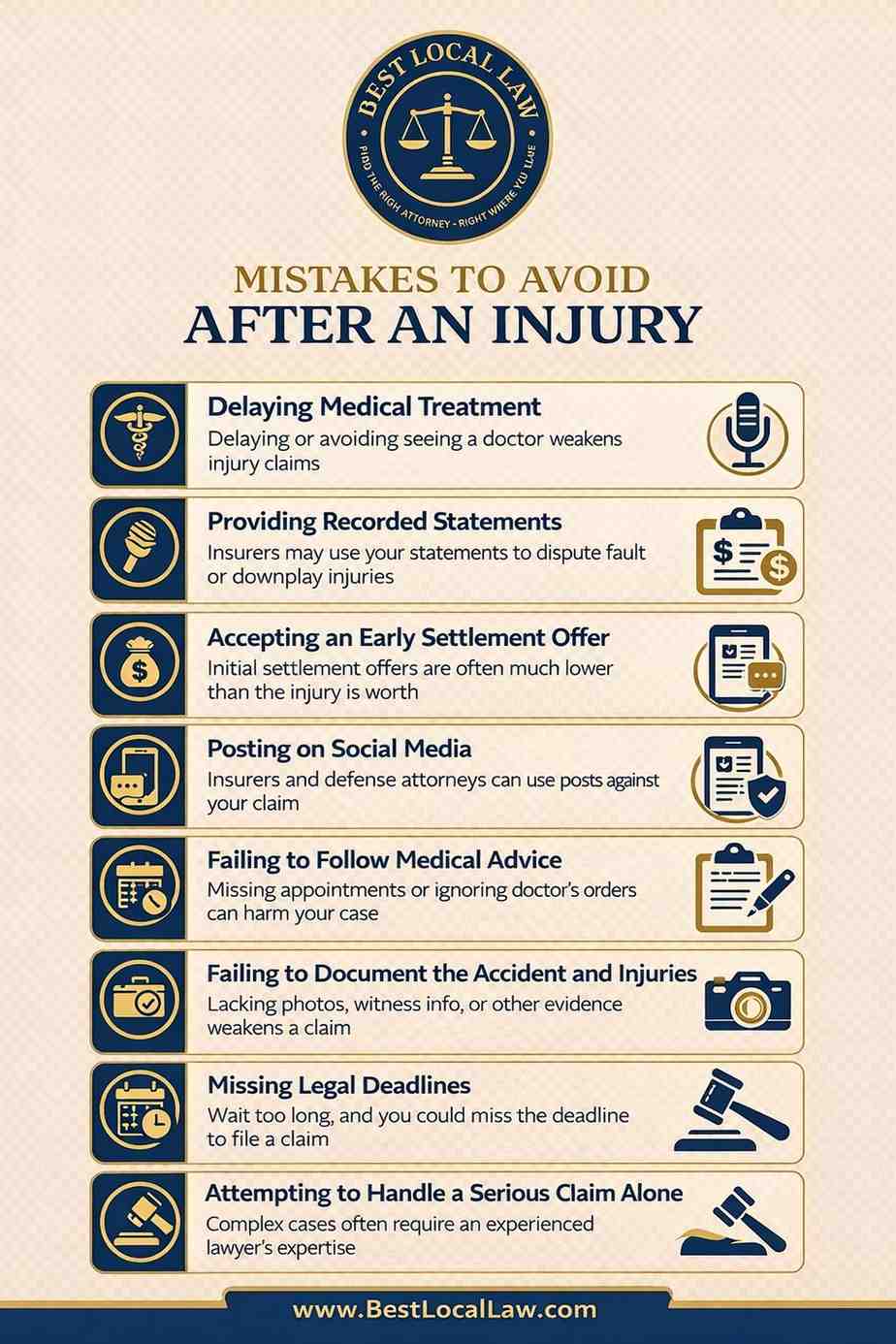
Actions taken after an accident can significantly affect a personal injury claim. Injury law requires strong evidence and careful compliance with legal and medical requirements. Personal injury attorneys often see otherwise valid claims weakened by avoidable mistakes, including the following:
- Delaying Medical Treatment
Failing to seek immediate medical care allows insurance companies to argue that injuries were not serious or were caused by something else. Under personal injury law, prompt treatment helps establish a clear link between the accident and the injuries. - Providing Recorded Statements to Insurance Companies
Insurance adjusters may request recorded statements shortly after an accident. These statements can be used to shift fault or minimize injuries. Injury law firms typically advise that a personal injury lawyer handle all insurer communications. - Accepting an Early Settlement Offer
Quick settlement offers are often made before the full extent of injuries is known. Once accepted, these offers usually prevent any additional compensation under injury law, even if future medical treatment is required. Personal injury attorneys evaluate whether a settlement reflects long-term costs. - Posting on Social Media
Photos, comments, or activity posts can be taken out of context and used to dispute the severity of injuries. Injury law firms commonly advise limiting social media use during an active personal injury claim. - Failing to Follow Medical Advice
Skipping appointments or not following prescribed treatment plans may suggest that injuries are minor. Personal injury law places significant weight on consistent medical documentation, and injury law firms emphasize compliance. - Failing to Document the Accident and Injuries
Failing to take photos, gather witness information, or preserve evidence can weaken a claim. Personal injury attorneys rely on thorough documentation to establish liability and damages under injury law. - Missing Legal Deadlines
Every personal injury claim is subject to a statute of limitations. Missing this deadline can permanently bar recovery, regardless of the strength of the case. Injury law firms track deadlines carefully to protect clients' rights. - Attempting to Handle a Serious Claim Alone
Complex claims involving significant injuries or disputed liability often require legal guidance. Without a personal injury lawyer, injured individuals may accept less than they deserve under personal injury law.
Frequently Asked Questions
How long does a personal injury case take?
The length of a personal injury case varies depending on the complexity of the claim, the severity of injuries, and whether the case settles or proceeds to court. Some injury law claims resolve in a few months, while others may take a year or longer. Personal injury attorneys often recommend waiting until the full extent of medical treatment is known before resolving a case under personal injury law.
What if I was partially at fault for the accident?
Many states follow comparative negligence rules, which allow injured individuals to recover compensation even if they were partially at fault. The total recovery may be reduced based on the percentage of fault assigned. Injury law firms carefully evaluate fault issues to protect clients' rights under personal injury law.
How much is my personal injury claim worth?
The value of a personal injury claim depends on medical expenses, lost wages, injury severity, long-term effects, and pain and suffering. Insurance policy limits also affect compensation. Personal injury lawyers analyze these factors rather than relying on estimates when calculating claim value under injury law.
Will my personal injury case go to trial?
Most personal injury claims are resolved through settlement, but some proceed to trial when liability or damages are disputed. Injury law firms prepare cases as though trial is possible, which often strengthens settlement negotiations. A personal injury lawyer can explain whether litigation is likely based on the facts of your case.
How much does it cost to hire a personal injury lawyer?
Most personal injury attorneys work on a contingency fee basis, meaning there are no upfront legal fees. The lawyer is paid only if compensation is recovered. This fee structure allows injured individuals to pursue claims under personal injury law without financial risk.
Do I need a lawyer for a minor injury?
Not every injury requires legal representation, but even minor injuries can become complicated when insurance companies dispute liability or downplay damages. Injury law firms can help determine whether working with a personal injury lawyer may increase compensation or prevent mistakes under injury law.
What types of compensation can I recover?
Personal injury law allows recovery for medical expenses, lost income, future medical care, pain and suffering, emotional distress, and other losses. In certain cases, punitive damages may also be available. Personal injury attorneys assess all potential damages under injury law.
What should I do immediately after an accident?
Seeking medical care, documenting the scene, gathering witness information, and reporting the incident are important first steps. Injury law firms often advise consulting a personal injury lawyer early to protect legal rights.
Can I still file a claim if my injuries appear later?
Some injuries, such as soft tissue injuries or concussions, may not be immediately apparent. Personal injury law allows claims once injuries are discovered, as long as deadlines are met. Injury law firms help link delayed symptoms to the original incident.
What happens if the insurance company denies my claim?
If an insurance claim is denied, a personal injury lawyer may challenge the decision through negotiations or by filing a lawsuit. Injury law firms are experienced in disputing wrongful denials and pursuing compensation through the legal system under personal injury law.
Here is a clean, authoritative conclusion to complete the guide, written to reinforce your core keywords and tie the entire piece together without sounding salesy or repetitive.
Understanding Personal Injury Laws and Lawsuits
Personal injury law provides an essential legal framework for individuals harmed by negligence or wrongful conduct. Understanding how injury law works-from identifying liability to calculating damages and navigating the claims process-can make a meaningful difference in the outcome of a case. When injuries disrupt health, finances, and daily life, knowing your rights is the first step toward recovery.
Because personal injury claims often involve complex legal rules, insurance company tactics, and strict deadlines, many injured individuals benefit from working with experienced personal injury attorneys. Injury law firms bring the knowledge, resources, and advocacy needed to build strong cases, negotiate fair settlements, and pursue litigation when necessary. A skilled personal injury lawyer not only handles legal details but also helps protect clients from common mistakes that can undermine a claim.
Every injury situation is unique, and there is no one-size-fits-all approach under personal injury law. Whether an injury results from a car accident, unsafe property conditions, medical negligence, or another preventable event, understanding the legal process empowers injured individuals to make informed decisions. By learning how injury law applies to real-world situations, individuals can better protect their rights and pursue the compensation needed to move forward with confidence.